

READ IN SPANISH / LEER EN ESPAÑOL
CHAPTER 2: THE ANATOMY OF LIQUIDATION
I. THE MORAL SAFARI OF THE METROPOLIS
For a certain European metropolitan Left, the Cuban tragedy has never been a matter of human rights or real economics. It has been an aesthetic accessory.
It is a privilege that can only be afforded by someone who has never stood for seven hours in the sun to secure a loaf of bread; someone who has never seen their mother boil water with leaves to soothe a child’s hunger during a twenty-hour blackout; and someone who has never felt the fear of speaking in a whisper inside their own home out of dread of the neighborhood CDR informer.
From comfortable parliamentary seats in Europe, they look at the Caribbean and do not see ten million hostages; they see a theme park for their domestic political battles. They do not pay a single penny to sustain that lie. The price is paid by the biological attrition of an entire people.
II. THE PROOF OF HUNGER: THE 1842 CODE VS. THE ACOPIO
Propaganda has repeated ad nauseam that the Revolution redeemed the Cuban people from a semi-feudal condition. Let us subject that claim to numbers.
In colonial Cuba, Article 11 of the Bando de Gobernación y Policía (Governance and Police Edict) of November 14, 1842, legally obligated the master to supply each slave daily with: six to eight ounces of meat or salted fish, root vegetables (viandas), and two hot meals a day. This amounted to nearly fifteen pounds of animal protein per month guaranteed by law to sustain the harvest and milling.
One hundred and eighty years later, a citizen receives through the MINCIN ration book—whenever it is available: one pound of chicken per month; zero ounces of beef (slaughtering a cow is penalized with up to fifteen years in prison); zero grams of milk for anyone over seven years old; and seven pounds of rice for thirty days.
The colonial slave legally received more protein in two days than a Cuban citizen receives in an entire month under the current system. This regression has been defended in Europe as “sovereign dignity.”
III. THE ACOPIO AS A WEAPON OF DOMESTICATION
Hunger in Cuba is not a planning error. It is a mechanism of control.
When the regime dismantled private agriculture and established the monopoly of Acopio (state crop requisition), it was not seeking to feed the country; it was seeking to strip the citizen of their biological autonomy. The peasant farmer is forced to hand over up to 90% of their harvest at prices fixed by the State. If they attempt to sell a sack of malanga directly to a family, the cargo is confiscated and the farmer is imprisoned for “illicit economic activity.”
A human being who spends fourteen hours a day searching for a pound of salt or a head of garlic has neither the time nor the energy to organize a strike or draft a manifesto. The acopio is the corral. The ration book is the leash. The most asphyxiating blockade Cuba suffers is not at sea; it is in the decrees that forbid Cubans from planting, fishing on their own coasts, and trading with their neighbors.
IV. THE VOYEURISM OF RUIN
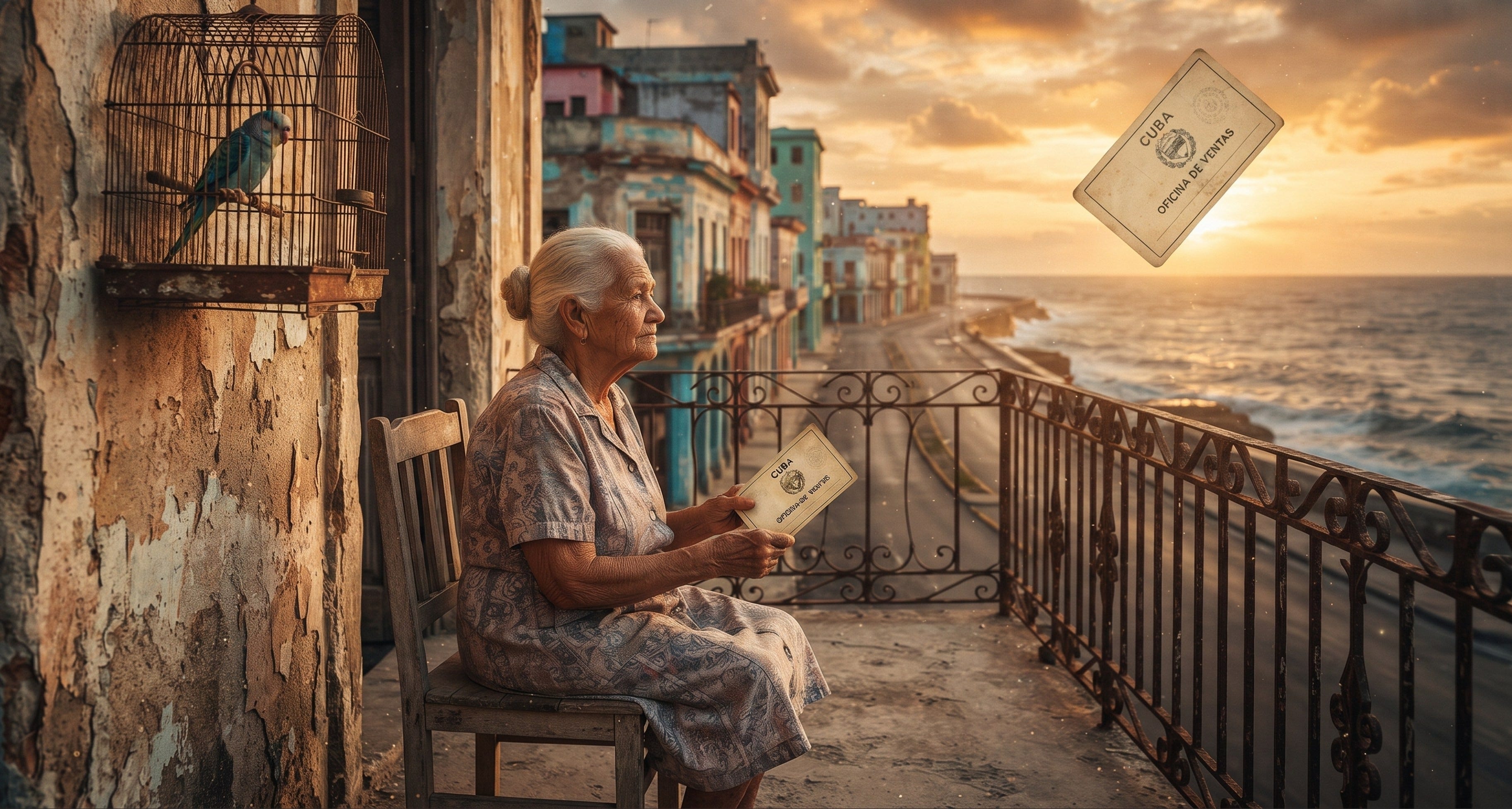
There is a distinct perversion in the visitor who travels to Havana to consume decay as art. They arrive on a commercial flight, stay in a hotel managed by a foreign chain in partnership with GAESA—complete with air conditioning and a fully stocked buffet—and step out into Centro Habana with a camera slung around their neck. They marvel at the 1957 Chevrolets and the cracked columns, writing about the “poetry of frozen time” and an “authenticity free from consumerism.”
What is picturesque to the tourist is a death trap for the family living behind that facade. Those walls are not frozen in time; they are collapsing onto cribs. Every time it rains, ceilings cave in during what the official press euphemistically calls “partial collapses.” The tourist holds a passport and a return ticket. They do not have to live out their days in the cemetery they praise.
V. THE BANKRUPTCY OF THE ALIBI
The myth survives in the West because it satisfies a psychological need: recognizing that the regime was, from day one, an involution that dismantled a prosperous republic would force that Left to admit the failure of its own collectivist dogmas. They prefer to sacrifice a nation upon the altar of their intellectual pride.
That time is now over. From Liverpool, from the heart of the territory where those careers are built upon our backs, this book wrests the microphone away from them. Cuba is not your moral laboratory. Cuba was a sovereign, cultured, and prosperous Republic, mutilated in 1959 by a de facto liquidator and kept on artificial life support by the complicity of those who, having the freedom to see the truth, chose the luxury of ignorance.
A Note on Sovereignty:
The Dissenter is 100% free, uncompromised, and carries zero corporate ads or algorithmic sponsors. This archive is funded entirely by reader sovereignty.
If you value independent intellectual critique, consider backing this work for $5/month. Supporters also unlock the complete audio-narrated mythic sci-fi saga, Arca of Itharion.
ESPAÑOL
CAPÍTULO 2: LA ANATOMÍA DE LA LIQUIDACIÓN
CUBA SE HA CONVERTIDO EN UN ZOO.
I. EL SAFARI MORAL DE LA METRÓPOLI
Para cierta izquierda metropolitana europea, la tragedia cubana nunca ha sido una cuestión de derechos humanos ni de economía real. Ha sido un accesorio estético.
Es un privilegio que solo puede permitirse quien jamás ha hecho una cola de siete horas bajo el sol para conseguir pan; quien jamás ha visto a su madre hervir agua con hojas para calmar el hambre de un niño en un apagón de veinte horas; y quien jamás ha sentido el miedo de hablar en susurro en su propia casa por temor al vecino del CDR.
Desde escaños cómodos en Europa, miran al Caribe y no ven diez millones de rehenes; ven un parque temático para sus batallas domésticas. No pagan un penique por sostener esa mentira. El precio lo paga el desgaste biológico de un pueblo entero.
II. LA PRUEBA DEL HAMBRE: EL CÓDIGO DE 1842 FRENTE AL ACOPIO
La propaganda ha repetido que la Revolución redimió al cubano de una condición semifeudal. Sometamos eso a números.
En la Cuba colonial, el Bando de Gobernación y Policía de 14 de noviembre de 1842, en su Artículo 11, obligaba al amo a suministrar diariamente a cada esclavo: de seis a ocho onzas de carne o pescado salado, viandas y dos comidas calientes al día. Cerca de quince libras de proteína animal al mes garantizadas por ley para sostener la molienda.
Ciento ochenta años después, un ciudadano recibe por la libreta del MINCIN, cuando existe: una libra de pollo al mes; cero onzas de carne de res (su sacrificio está penado con hasta quince años de cárcel); cero gramos de leche para mayores de siete años; y siete libras de arroz para treinta días.
El esclavo colonial recibía por mandato legal más proteína en dos días que un ciudadano cubano en un mes bajo el sistema actual. Ese descenso ha sido defendido en Europa como “dignidad soberana.”
III. EL ACOPIO COMO ARMA DE DOMESTICACIÓN
El hambre en Cuba no es un error de planificación. Es un dispositivo de control.
Cuando el régimen desmanteló la agricultura privada e instauró el monopolio del Acopio, no buscaba alimentar al país; buscaba despojar al ciudadano de su autonomía biológica. El campesino está obligado a entregar hasta el 90% de su cosecha a precios fijados por el Estado. Si intenta vender un saco de malangas directamente a una familia, le requisan la carga y lo encarcelan por actividad económica ilícita.
Un ser humano que pasa catorce horas al día buscando una libra de sal o una cabeza de ajo no tiene tiempo ni energía para organizar una huelga o redactar un manifiesto. El acopio es el corral. La libreta es la correa. El bloqueo más asfixiante que sufre Cuba no está en el mar; está en los decretos que le prohíben al cubano sembrar, pescar en sus propias costas y comerciar con su vecino.
IV. EL VOYEURISMO DE LA RUINA
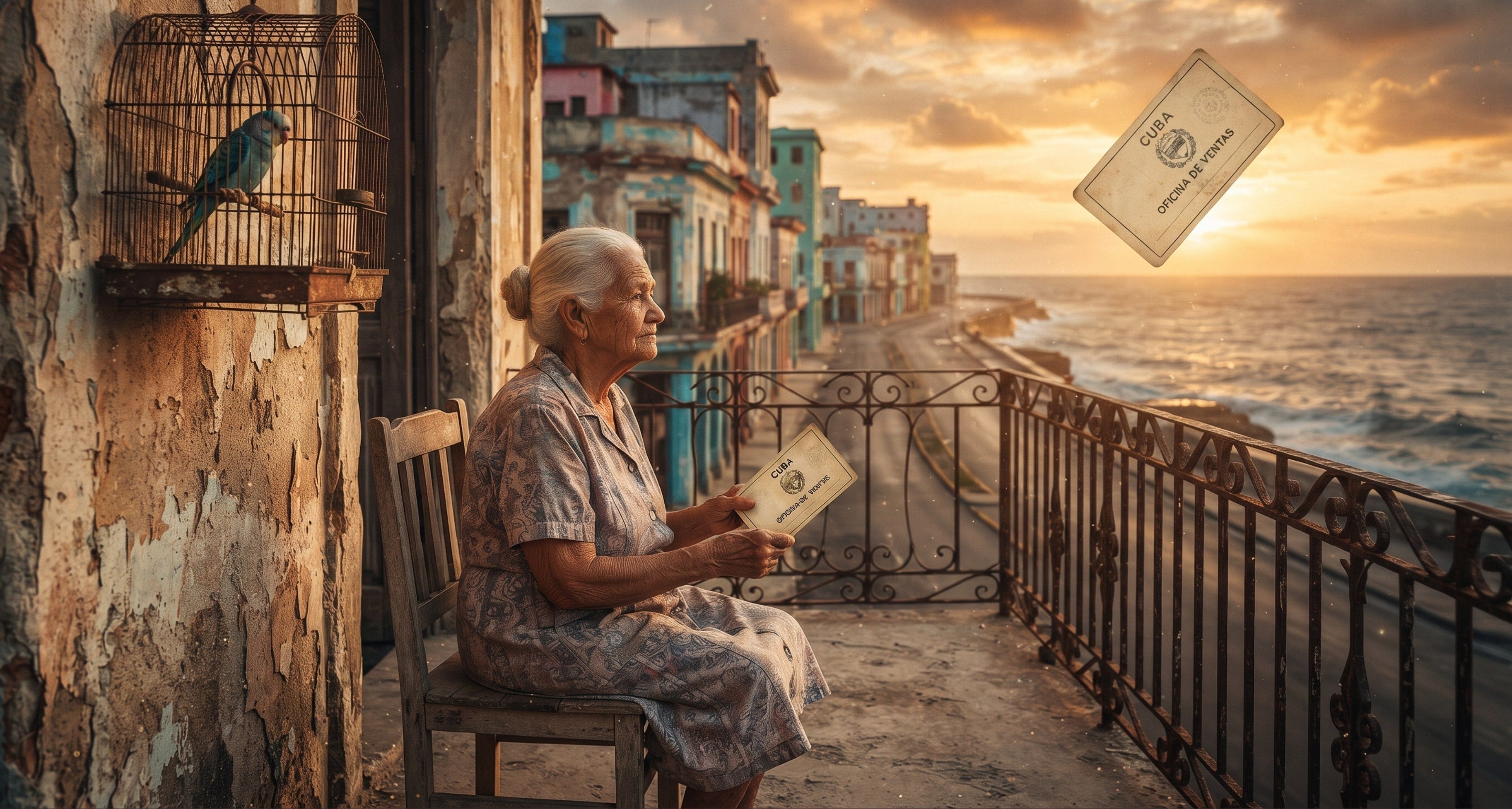
Hay una perversión en el visitante que viaja a La Habana a consumir la decadencia como arte. Llega en vuelo comercial, se hospeda en un hotel gestionado por una cadena extranjera en sociedad con GAESA, con aire acondicionado y bufé repleto, y sale a Centro Habana con la cámara colgada. Se maravilla ante los Chevrolet de 1957 y las columnas agrietadas y escribe sobre la “poesía del tiempo detenido” y la “autenticidad libre del consumismo.”
Lo que para él es pintoresco, para la familia detrás de esa fachada es una trampa mortal. Esas paredes no están detenidas en el tiempo; se están cayendo sobre las cunas. Cada vez que llueve, los techos colapsan en lo que la prensa oficial llama “derrumbes parciales.” El turista tiene un pasaporte y un billete de regreso. No tiene que quedarse a vivir en el cementerio que alaba.
V. LA QUIEBRA DE LA COARTADA
El mito sobrevive en Occidente porque satisface una necesidad psicológica: reconocer que el régimen fue desde el primer día una involución que desmanteló una república próspera obligaría a esa izquierda a admitir el fracaso de sus dogmas colectivistas. Prefieren sacrificar a una nación en el altar de su orgullo intelectual.
Ese tiempo se ha terminado. Desde Liverpool, desde el corazón del territorio donde se construyen esas carreras sobre nuestras espaldas, este libro les arrebata el micrófono. Cuba no es su laboratorio moral. Cuba fue una República soberana, culta y próspera, mutilada en 1959 por un liquidador de facto y mantenida en respiración artificial por la complicidad de quienes, teniendo la libertad de ver la verdad, eligieron el lujo de la ignorancia.
A Note on Sovereignty:
The Dissenter is 100% free, uncompromised, and carries zero corporate ads or algorithmic sponsors. This archive is funded entirely by reader sovereignty.