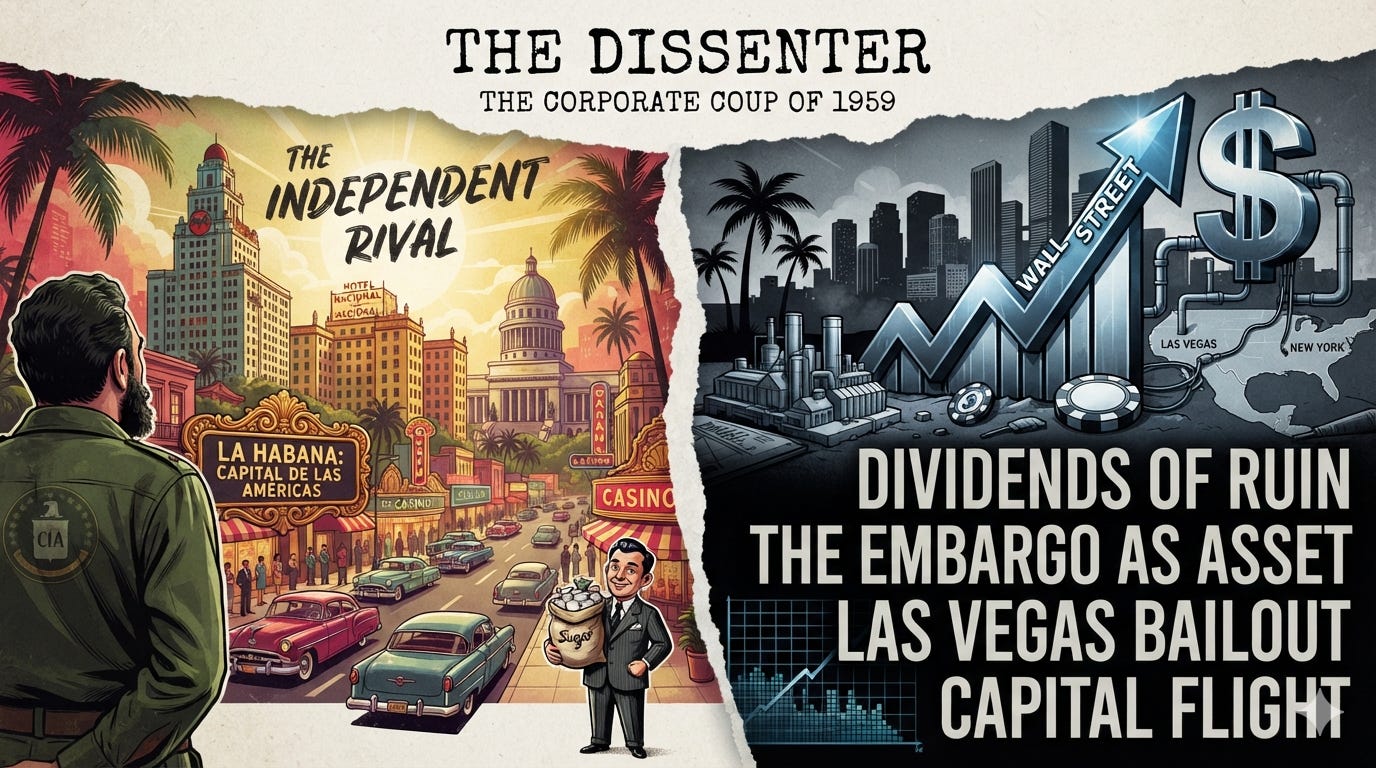
Introduction: The Liquidator in Olive Drab
For over six decades, both sides of the Florida Straits have enthusiastically maintained a highly profitable theatrical production.
In Havana, the regime drapes itself in the romantic, threadbare rags of anti-imperialist defiance. In Washington and Miami, politicians beat their chests, fundraising off the tragic spectacle of a captive island while renewing a perpetual embargo.
It is a beautiful, symbiotic narrative. It is also a complete lie.
When you strip away the visceral noise of Cold War ideology and apply the coldest, most rigid rule of corporate forensic analysis, “follow the money”—the historical equation undergoes a violent mutation.
Fidel Castro was not the vanguard of a socialist dawn, nor was he an accidental malfunction of regional history. In the unyielding arithmetic of global market dominance, Castro functioned as the ultimate corporate liquidation lawyer.
He executed the most massive, thorough, and uncompensated demolition of a sovereign commercial competitor in the history of the Western Hemisphere. And he handed the entire estate, on a silver platter, to the United States.
Let us fix the semantic record once and for all: there was no romantic guerrilla revolution. What occurred in 1959 was a planned, deliberate, and masterfully executed “involution.” It was the calculated, systemic dismantling of a booming, independent regional powerhouse that had grown entirely too competitive for the comfort of northern monopolies.
Washington didn’t need to send the Marines to conquer the fiercely independent economy of Republican Cuba. They simply stood back, engineered the vacuum, and ordered the fictional nemesis to drive a powerful trading partner into absolute bankruptcy. This clinical liquidation successfully rerouted trillions of dollars in tourism, banking, agriculture, and infrastructure directly into the waiting pockets of Wall Street and the state of Florida. This was a cheap investment for the trillions they got back.
I give you this for this; it was a transaction, and Castro got to play God with 7 million slaves. That was his personal reward.
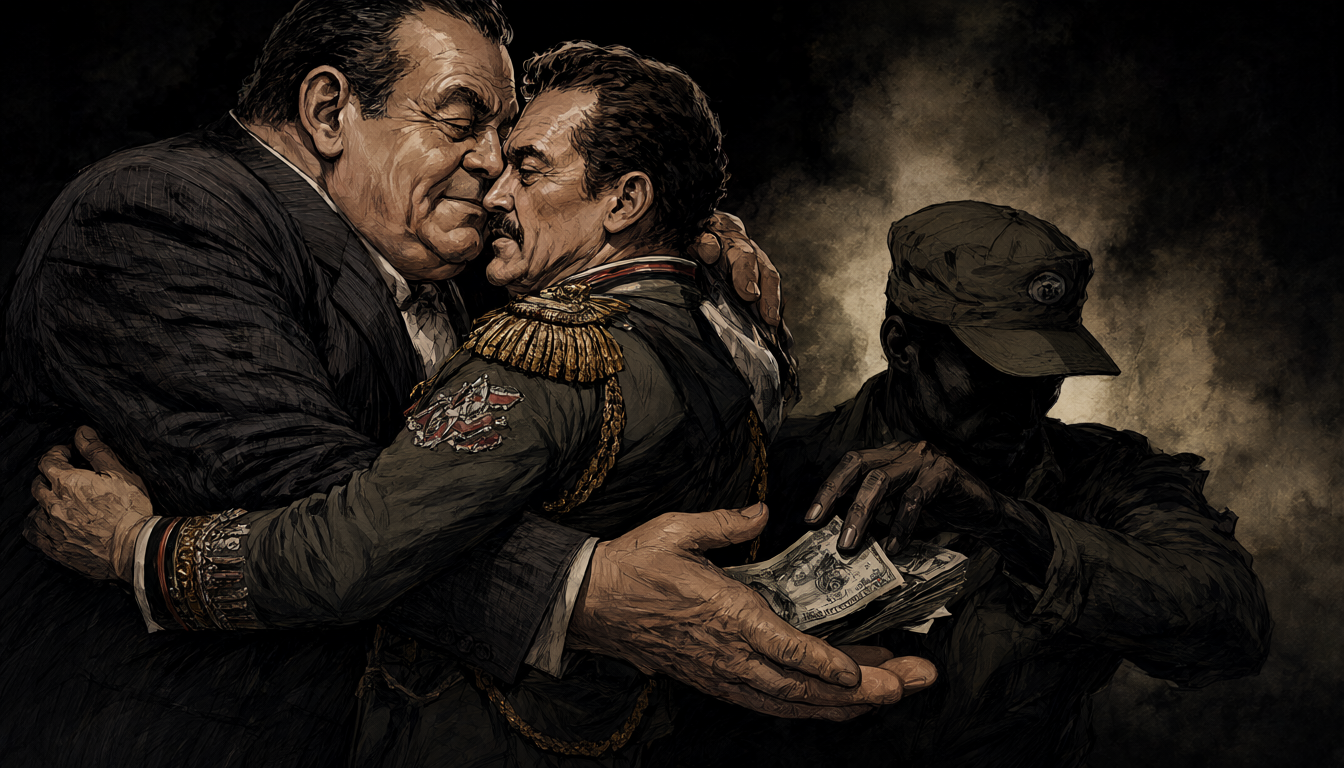
Chapter 1: The Managed Demolition of the Cuban State
The conventional historical narrative relies heavily on the assumption that Washington fought tooth and nail to preserve Fulgencio Batista's status quo. The archives declassify a completely different reality. By 1958, republican Cuba had grown entirely too independent, its currency too strong, and its domestic industries too fiercely competitive for the comfort of northern monopolies.
The island was rapidly evolving from a compliant client state into a sovereign Caribbean financial powerhouse. The intervention required to halt this trajectory was not military; it was structural.
In March 1958, the United States government delivered a calculated, decisive blow to the Cuban state apparatus by implementing a strict arms embargo against Batista’s military. This was not a stance of diplomatic neutrality but an active tactical intervention.
By freezing the supply of parts, ammunition, and weapons to the constitutional army—and simultaneously pressuring European allies to cancel their own arms contracts with Havana—Washington mathematically guaranteed the collapse of the Cuban military infrastructure. The embargo was designed to shatter the morale of the armed forces, systematically paving a clean, unobstructed highway for Castro’s rebel army to march into the capital.
This was not a failure of intelligence; it was a masterclass in corporate hedging and managed transition, orchestrated directly by the CIA’s Havana Station operating under diplomatic cover out of the U.S. Embassy. While politically appointed U.S. Ambassadors like Earl E.T. Smith were kept in the dark—publicly championing the dictator to maintain a veneer of stability—intelligence officers on the ground were running an entirely separate, parallel script.
Under the direction of CIA Chief of Station James A. Noel, the Havana Station coordinated the precise timing of the regime’s collapse. Noel systematically managed the intelligence pipeline, neutralizing Ambassador Smith’s warnings and filtering the reporting sent back to Washington. The station was neither blinded by Castro’s guerrilla mystique nor ignorant of his radical background; rather, they were calculating his utility as a geopolitical wrecking ball.
In eastern Cuba, the frontline of the insurrection, CIA operative William “Bill” Patterson utilized his diplomatic immunity to actively communicate with, shield, and materially insulate the urban networks of the July 26th Movement. By treating the rebels as a manageable “agrarian reform” group, these operatives ensured the steady flow of momentum remained squarely behind Castro.
The mano oculta (hidden hand) of the Havana Station extended directly into financial logistics. Through an engineered web of cutouts and urban underground handlers, the CIA funneled at least $50,000 in secret funds directly into Castro’s movement.
This operational timeline challenges the narrative of Washington’s ignorance. A superpower does not disburse the modern equivalent of nearly half a million dollars to an unknown entity. Four years after the 1953 Moncada barracks assault, Castro was already recognized as a radical armed actor, meaning planners knowingly backed a proven insurgent force.
The $50,000 cash drop was only the financial layer. Castro’s movement was armed by a massive, open-air gunrunning corridor operating out of Florida.
Miami pilot Charles Hormel flew 27 consecutive, fully loaded arms shipments from Broward County into rebel territory.
He was only caught on his 28th flight when his plane crashed near Guantanamo Bay. Former Cuban President Carlos Prío Socarrás bankrolled the operation from a Miami penthouse; when a federal grand jury indicted him for violating the Neutrality Act, his penalty was a mere $9,000 fine—a transaction cost that kept the weapons flowing.
Even figures like Frank Sturgis, who operated inside Castro's logistics network, were moving high-grade American hardware purchased from dealers like the International Armament Corporation in Virginia.
For a superpower obsessively monitoring its borders during the Cold War, a multi-year weapons corridor flowing straight into the Sierra Maestra requires a deliberate choice.
The US government didn't need to put guns on a military cargo plane. They simply let the private gunrunners, the exiled bankrolls, and the deniable assets do it for them.
U.S. and Cuban intelligence were well aware that Fidel Castro was involved with violent student political gangs (gangsterismo) during his time at the University of Havana in the late 1940s
At the same time, officials in Washington and Havana actively undermined moderate anti-communist alternatives seeking to fill the political vacuum.
Simultaneously, planners in Washington and Havana systematically sabotaged every moderate, anti-communist “Third Force” military junta that attempted to step into the vacuum. When the constitutional army began to fracture in late 1958, the CIA ensured that no stable, independent democratic transition could take place. They cleared the board entirely, allowing the most ruthless element to take absolute control.
The resulting vacuum achieved exactly what U.S. planners intended: the complete liquidation of a sovereign financial rival. The multi-billion-dollar Caribbean tourism, banking, and real estate markets were forcibly routed into domestic hubs like South Florida and Las Vegas. Simultaneously, the immense wealth of the Cuban sugar quota was permanently carved up and redistributed to enrich mainland agricultural conglomerates and secure debt-driven allegiances across the hemisphere.
They did not create a monster by accident; through the calculated maneuvers of James Noel, Bill Patterson, and the Havana Station, they financed and cleared the path for an enforcement agent capable of permanently removing the Cuban Republic as an independent competitor.
The true darkness of the 1959 transition lies not in the chaos of the revolution but in the calculated precision of its engineering. By dismantling the foundational myth of a Washington desperately clinging to Batista, we are forced to confront a far more ruthless reality: that the Cuban Republic was not overthrown by a romantic guerrilla awakening but systematically liquidated by the very empire that claimed to protect it.
The decades of isolation, embargo, and fractured families that followed were not geopolitical accidents—they were the permanent structural walls required to ensure a sovereign regional competitor would never rise again.
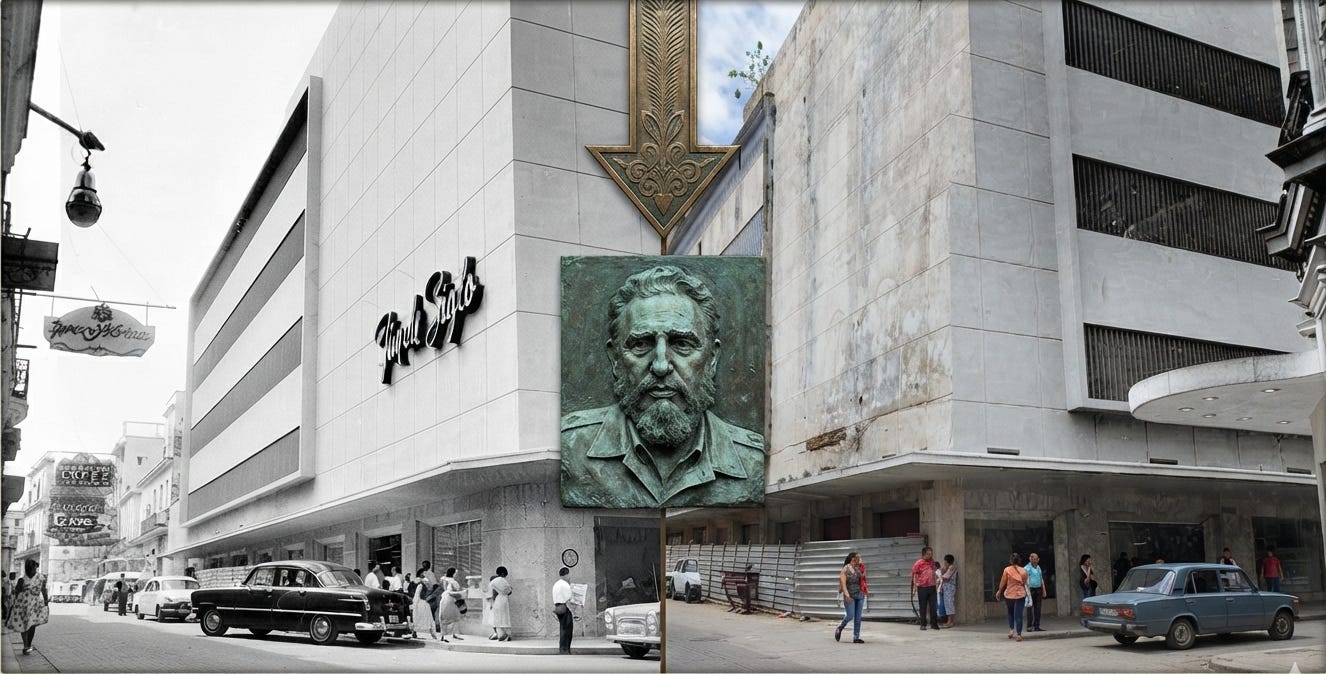
Chapter 2: The Great Commodity and Tourism Asset Stripping
In the global marketplace, if you eliminate the market leader, you inherit the kingdom. Before 1959, Cuba was not a colony; it was a sovereign production powerhouse that dictated global terms in agriculture and leisure. Castro’s entry into the board of directors didn’t nationalize wealth—it liquidated it, allowing American corporations to absorb the market share without paying a single dollar in acquisition costs.
The Sugarcane Cannibalization
Before the revolution—or involution, as I call it—Cuba was the undisputed sugar bowl of the planet, feeding the massive consumer engine of the United States with high-quality, low-cost sugar. The moment Castro implemented the “Acopio” solution to the free market and drove the highly advanced Cuban agrarian infrastructure into terminal decay, a massive production vacuum opened.
The beneficiary was not a socialist paradise; it was the State of Florida.
In 1959, Florida’s domestic sugar industry was a minor, struggling operation, with only 55,000 acres of sugarcane feeding a mere three mills. By 1964, utilizing the stolen know-how of exiled Cuban agronomists who fled Castro’s confiscations, Florida’s sugarcane fields exploded by over 300% to 223,000 acres. Today, the multi-billion-dollar American sugar lobby owes its entire protected monopoly to the permanent removal of Cuban competition. Cuba went from the world’s leading exporter to a broken nation that must import sugar from abroad to fulfill its basic rationing.
The Las Vegas Bailout
In the 1950s, La Habana was the undisputed capital of international entertainment, monopolizing over 31% of the entire Caribbean tourism market. It possessed an architectural and cultural nightlife that rendered Miami Beach a seasonal afterthought and Las Vegas a dusty, regional gambling outpost in the Nevada desert.
By outlawing casinos, shutting down world-class venues, and criminalizing luxury entertainment, Castro executed the ultimate bailout for the American gambling industry. Trillions of dollars in potential tourism capital, luxury hotel developments, and global travelers were forcibly rerouted north. Las Vegas didn’t defeat Havana in a fair commercial war; Castro simply handed them a permanent monopoly over the American leisure dollar.
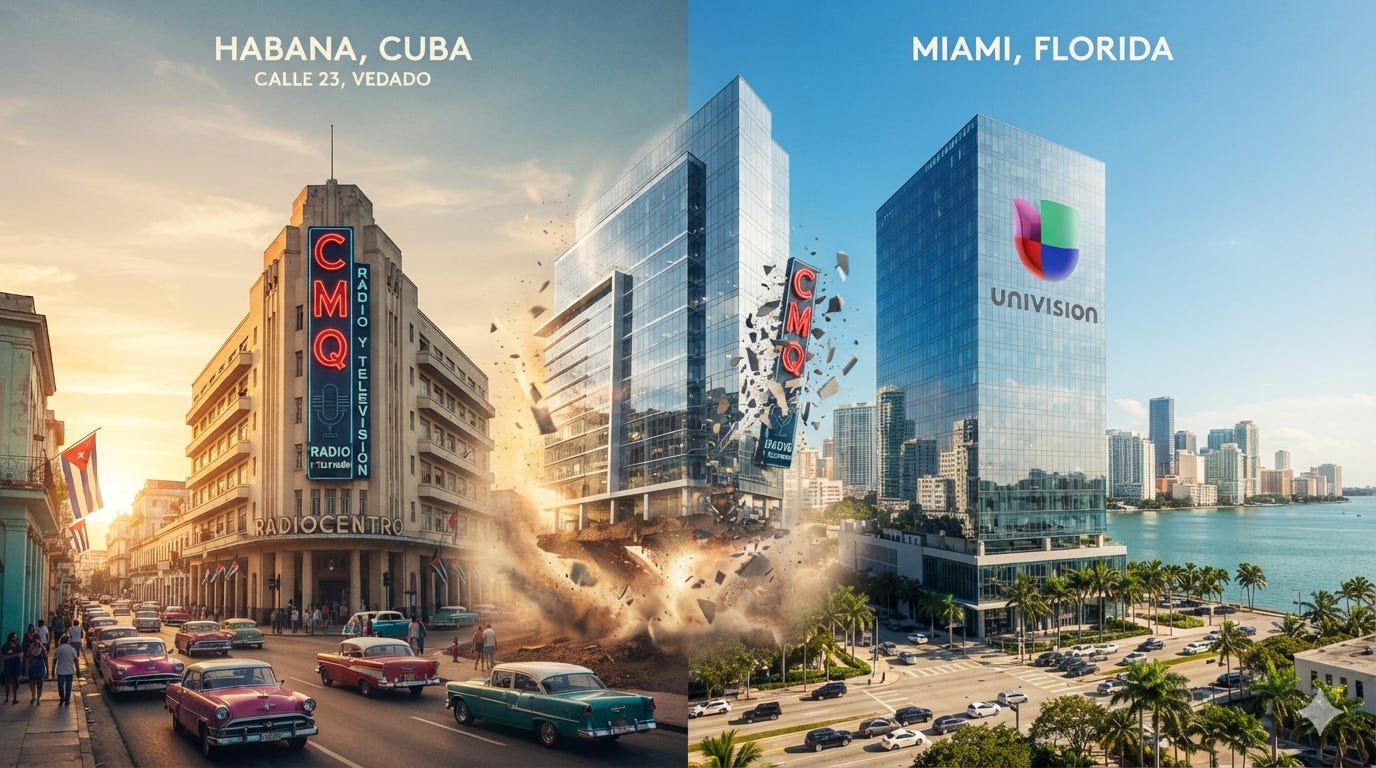
Chapter 3: The Intellectual Property and Media Raid
The architectural matrix of a nation is not just built on concrete; it is built on its brains, its patents, and its broadcast dominance. Cuba was a global titan in mass media, becoming the second country in the world to launch regular color television broadcasting in 1958 via Telecolor Channel 12.
When the regime systematically hunted down, shuttered, and nationalized media empires like the Mestre brothers’ CMQ, it didn’t democratize the airwaves. It triggered the greatest intellectual property heist of the century, to the exclusive benefit of the Anglo-American market.
The Foundation of Hispanic TV in the US
The sudden, violent nationalization of Cuban media forced a mass exodus of the most brilliant production minds, engineers, writers, and actors in Latin America. This massive injection of free, highly sophisticated human capital didn’t disappear into thin air—it landed directly in the United States.
American media networks absorbed decades of Cuban know-how—the creators of the daily telenovela, live sports broadcasting, and advanced marketing jingles—for zero cost. This stolen brain trust laid the exact foundational bricks for what would become multi-billion-dollar media conglomerates like Univision and Telemundo. The capital of Spanish-language media was forcibly moved from La Habana to Miami by the decree of an olive-drab dictator.
The Trademark and Patent Freeze
By removing Cuba from the international legal framework of protected trademarks and free trade, the regime abandoned decades of highly valuable proprietary assets. Iconic Cuban formulas, historic cosmetic brands like Crucellas and Sabatés, and legendary spirit and tobacco trademarks were legally isolated.
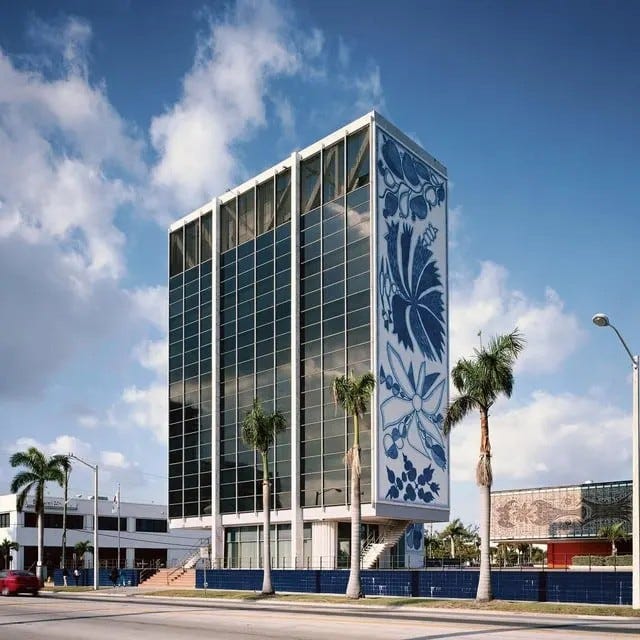
Bacardi left Cuba and planted its new flag at 2100 Biscayne Boulevard in Midtown Miami, Florida, in 1963. Agile Western competitors moved swiftly to re-register, exploit, and market these legendary names across the globe’s most lucrative consumer markets, effectively cutting off the Cuban nation from the financial rewards of its own historical intellectual property.
Chapter 4: The Ultimate Symbiotic Póliza de Seguro
The final proof that Castro operated as the perfectly controlled adversary lies in the structural permanence of the US embargo. To the uninitiated, the embargo is a weapon designed to crush the regime. To the forensic analyst, it is a mutual insurance policy that guarantees the permanent stagnation of the competitor.
The embargo functions as a magnificent geopolitical smoke screen:
For the Cuban Dictatorship: It provides the permanent, unassailable alibi for the economic devastation engineered by the criminal policies of the Havana regime. Every dead electrical grid, every empty pharmacy, and every starving household is blamed on the external “blockade,” protecting the military elite from a popular uprising—serving as a convenient flagpole for the lefties and anti-American sucker politicians of the world.
For the United States: It acts as a permanent legal barrier that prevents Cuba from ever reintegrating into the global market as a sovereign competitor. It protects Florida’s agricultural monopolies, keeps the tourism dollar safely within US borders, and keeps the island dependent on buying hundreds of millions of dollars in frozen poultry and agricultural goods directly from American farmers—paid strictly in cash.
An insurance policy exists to guarantee that the disaster never ends—because the disaster is the asset. As long as the embargo stands, the dictatorship never answers for its own wreckage, and the Empire never faces a resurrected competitor. The policy is renewed every year. The premium is paid in Cuban hunger. The beneficiaries are named in Washington and Havana. And the insured—the Cuban people—never signed a single page.
And the Cubans of Miami, and of a hundred other cities, never return to invest in the island.
The decision was not taken by "Washington" as a monolith, and it was not taken by the diplomats. Philip Bonsal, the last American ambassador to Havana, later stated that the harshest sanctions—including the suspension of the sugar quota—were imposed without the prior knowledge of the State Department or his own embassy in Havana
He attributed them to the pressure of private American oil and sugar interests and to “various highly placed people in different agencies”—Nixon’s office, the CIA, and the Treasury Department—who took decisions without informing State. The sugar quota suspension, Bonsal said, “was a major element in the program for the overthrow of Castro,” to be complemented by “United States-directed and subsidized covert operations.”
So understand who strangled Cuba: not a unanimous empire, but a faction of the coercive state acting in alignment with the oil and sugar interests, while the men who wanted to negotiate were cut out of the room. The Mallory memorandum of April 6, 1960 had already stated the goal in writing—” every possible means should be undertaken promptly to weaken the economic life of Cuba... to bring about hunger, desperation and overthrow of government.” The instrument followed in July, when Eisenhower cut the sugar quota. The intent was documented before the weapon was fired.
Chapter 5: Anticipating the Orthodoxy: A Forensic Counter-Attack
The gatekeepers of historical orthodoxy—the textbook academics and the institutional analysts—will immediately scream “conspiracy theory.” They will pull out their standard defense mechanisms to protect the narrative of a chaotic, accidental Cold War. They will look at our balance sheet of American benefits and claim we are confusing a retroactive windfall with an intentional masterstroke of corporate planning.
Let us anticipate their defense. Let us drag their three sacred cows to the slaughterhouse of cold results.
1. The Fallacy of the “Billion-Dollar Capital Loss”
The academic elite will point to 1960 and argue, “Wall Street would never orchestrate the rise of a dictator who executed the largest uncompensated expropriation of American corporate property in Western Hemisphere history, costing US firms $1 billion.”
This argument treats Wall Street as a unified, sentimental monolith. It is not. Wall Street is a Darwinian ecosystem. The billion dollars expropriated by Castro consisted of static, old-economy assets: aging oil refineries, fixed public utilities, and land-bound sugar plantations on a foreign island. In the calculus of creative destruction, those assets were readily sacrificed, written off as corporate tax deductions, or liquidated to clear the board.
Why? Because their permanent elimination allowed a far more lucrative, mainland-based corporate matrix to emerge. The sacrifice of a few aging refineries in Havana paved the way for the multi-billion-dollar expansion of the Florida sugar lobby, the monopolization of the Caribbean leisure market by Nevada, and the creation of a permanent Latin American banking nexus in Miami. They traded cheap pawns on the island to secure a permanent, trillion-dollar checkmate on the continent.
2. The Theater of Nuclear Brinkmanship
The second institutional defense points to the Bay of Pigs and the Cuban Missile Crisis of 1962: “Washington was in a state of genuine nuclear panic; this was a real geopolitical enemy, not a controlled symbiosis.”
Again, they ask you to look at the terrifying theatrical smoke, not the cold ledger of the final contract. Let us look at the actual resolution of the Cuban Missile Crisis—the October 1962 agreement between John F. Kennedy and Nikita Khrushchev.
What did the United States government actually sign to end the crisis? Washington delivered a binding, permanent diplomatic guarantee never to invade the island of Cuba. In exchange for removing missiles that the USSR could easily launch from submarines, the United States granted Fidel Castro a permanent, lifetime insurance policy for his totalitarian regime. The crisis didn’t break the symbiosis; it codified it into international law. Washington officially outsourced the permanent economic containment of Cuba to the very man who was driving it into the dirt.
3. The Accident Alibi vs. The 65-Year Asset
Finally, the critics will claim: “History is an accidental train wreck; American corporations simply adapted retroactively to a chaotic situation.”
An accident that yields a compounding, multi-billion-dollar dividend for sixty-five consecutive years is no longer an accident; it is an administered asset. If the U.S. Embargo was a genuine diplomatic mistake that accidentally kept a communist dictator entrenched at 90 miles, it would have been dismantled in 1991 the second the Soviet Union dissolved and the geopolitical threat vanished.
The fact that the embargo was legally hardened and preserved long after Cuba ceased to be a military threat proves its true function. It was never a weapon to liberate the Cuban people. It was a structural fence designed to keep the competitor permanently locked inside a bankrupt corral, ensuring that the wealth, the talent, and the market share of the Caribbean remained safely north of the straits.
Chapter 6: Systemic Alignment vs. The “Hive-Mind” Fallacy
The institutional critics will make one final, desperate stand. They will claim our analysis requires an impossible level of centralized corporate collusion. They will argue that Standard Oil wouldn’t sacrifice its refinery in Havana just so a sugar farmer in Palm Beach could expand his acreage. They call it teleological reasoning.
They are wrong because they confuse a conspiracy with a system.
The high-yield demolition of Republican Cuba did not require a coordinated, smoke-filled boardroom meeting in 1959. Capitalism and geopolitics do not operate via a synchronized hive-mind; they operate via the brutal, automated alignment of incentives.
Once Castro pulled the trigger of collectivization, the American empire didn’t need to invite the disruption. The system simply adapted to maximize the windfall. The losses of individual corporate firms in 1960 were localized collateral damage; the macroeconomic gains for the mainland infrastructure were structural, compounding, and permanent.
The institutional elite argues that the embargo survived after 1991 simply due to the “electoral arithmetic of the Cuban-American lobby in Florida.” This is a spectacular piece of naive reductionism. To believe that a handful of exiles in Miami successfully hijacked the foreign policy of the world’s ultimate superpower for 35 years against its own economic interests is the real conspiracy theory.
The embargo remained because the system recognized its immense structural value. It kept a dangerous, highly productive competitor safely locked inside an ideological quarantine zone while the mainland swallowed its markets whole.
The Universal Blueprint (From Castro to Putin)
Fidel Castro was the prototype of the Useful Nemesis—a historical figure whose loud, performative defiance of the West serves as the perfect cover for the systemic destruction of his own nation’s competitive sovereignty. We see the exact same architectural blueprint operating on the global stage today with figures like Vladimir Putin.
The orthodox narrative frames Putin as a chessmaster fighting Western hegemony. The cold ledger of results shows an entirely different balance sheet:
By invading Ukraine, Putin provided the ultimate geopolitical adrenaline shot to a dying NATO.
He triggered a massive, unprecedented flight of Russia’s brightest technical and scientific brains straight into Western economies.
He froze Russian capital markets, permanently isolating his country’s resources and turning a potential Eurasian economic superpower into a crippled, dependent vendor of cheap raw materials.
Like Castro, Putin functions as a high-yield corporate restructuring asset for the West, wrapped in the flag of nationalist resistance.
⚔️ The Tactical Epilogue: The Pincer That Never Was (The Absolute Beta Test of Betrayal)
The standard playbook of academic historiography loves to classify the disaster at Playa Girón (The Bay of Pigs) as a tragic comedic error—a localized breakdown of coordination, a sudden cold foot in the Oval Office, or a failure of low-altitude cloud cover.
I feel deeply sorry for the Cubans of the brigade; they were used and exposed to death and prison purely for the show, while they did it for the love of the homeland
Let us subject that comfortable alibi to a ruthless exercise in basic military doctrine.
If a global superpower possesses the absolute military intent to neutralize an existential threat situated ninety miles from its coastline, the operational equation dictates a textbook execution of a synchronized double-pincer offensive.
You do not deposit 1,400 native volunteers on an isolated swamp in the south, completely cut off from logistical lifelines, and call it an invasion. If the United States government genuinely desired to liberate the Cuban Republic and liquidate the July 26th regime in April 1961, the tactical protocol was simple, brutal, and unanswerable:
The Southern Anvil: Deploy the fiercely loyal, highly trained anti-communist Vanguard of the Brigada 2506 through the southern marshes of the Zapata Peninsula to anchor the dictator’s standing army in a bloody war of attrition.
The Northern Hammer: Concurrently unleash the full, unmitigated armored amphibious fury of the United States Marine Corps straight through the northern beaches of Havana or Matanzas, seizing the administrative nervous system of the capital within forty-eight hours.
The Logistics of the Clean Cut: The Sealed Boundary
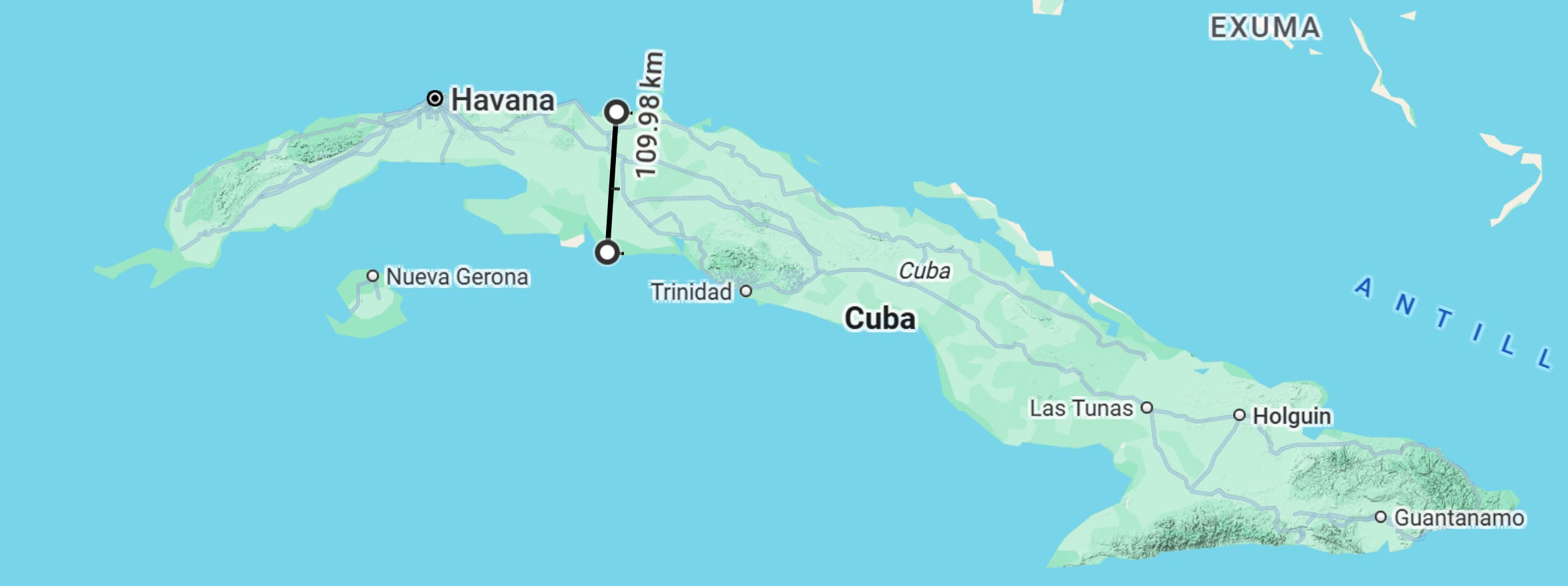
Look closely at the metrics carved across that geographic terrain. A mere 109.98 kilometers separates the northern coast from the southern shoreline at the island’s narrow midsection.
To any officer trained in basic theatre mechanics, the geographic mandate for a genuine liberation was staring Washington directly in the face. If the objective was the immediate restoration of the Cuban Republic, the combined forces would have executed a clinical, textbook strategic bisection:
The Eastern Wall of Containment: Establish an impenetrable, heavily fortified line of control right down that 110-kilometer central axis. This single movement would have completely severed the island’s spine, instantly paralyzing the dictator’s communication lines and freezing the mass mobilization of his militia reinforcements in the eastern provinces. The regime’s historical stronghold would have been neutralized in a logistical vacuum overnight.
The Westward Hammer to Havana: With the eastern flank permanently locked down and isolated, the combined pressure of the native Vanguard pushing from the south and the heavy armored mechanization of the U.S. Marines sweeping from the north would have rotated efficiently to the west. A clean, devastating sweep toward Havana would have compressed the remaining regime forces against the sea, forcing an unconditional administrative collapse within days.
This was not a complex multi-year campaign; it was a clinical operation of strangulation and yunque-and-hammer execution.
The fact that this mathematically pristine, obvious maneuver was never ordered is the smoking gun of the entire layout. The Empire did not stay its hand out of diplomatic hesitation; they kept the Marines on the ships because a quick victory would have ruined the balance sheet. They needed the cut to happen only on paper, allowing the useful nemesis in Havana to lock the cage tight and begin his 65-year tenure as the unpaid asset liquidator of the Caribbean.
That is how a superpower wins a war. That is how an empire reclaims its client state.
But Washington meticulously chose a completely separate script. They systematically denied the Brigada 2506 their promised air cover, leaving the transport vessels Houston and Río Escondido to be systematically picked apart like sitting ducks by Castro’s meager sea-furies planes. They kept the Marines idling on their carrier decks, watching the smoke rise from the horizon while the finest sons of the Cuban professional class were slaughtered and captured in the mud.
This was not a malfunction of command. It was the deliberate execution of a managed liquidation.
The asset planners of the Havana Station and the Pentagon did not need the Brigada 2506 to win the beachhead. In the colder arithmetic of the Useful Nemesis Blueprint, those 1,400 brave men were far more valuable as martyrs of an engineered betrayal.
Had the Brigada won that beach, a restored, sovereign, and intensely capitalistic Cuban Republic would have immediately re-entered the global board. It would have aggressively reclaimed its multi-billion-dollar domestic sugarcane quota, reactivated its sovereign dominance over the Caribbean luxury tourism market, and instantly choked off the embryonic, multi-billion-dollar corporate expansions of South Florida agriculture and the Las Vegas casino infrastructure before they could even take root.
By ensuring the total, calculated failure of the invasion, the system achieved the perfect corporate realignment:
It permanently eliminated the internal sovereign threat: It handed Fidel Castro the ultimate domestic alibi to arrest over 100,000 citizens in a single night, completely sanitizing the island of any internal anti-communist resistance.
It codified the quarantine into international law: It set the theatrical stage for the October 1962 missile crisis, where John F. Kennedy signed the ultimate lease of permanence—a binding diplomatic guarantee never to invade Cuba, effectively outsourcing the permanent economic containment of the Caribbean to the olive-drab dictator himself.
It manufactured a captive, loyal colony in exile: It forced the broken, traumatized survivors straight into the geographic grid of South Florida, providing a massive, free injection of high-IQ human capital to build the infrastructure of Miami, while trapping them in a permanent psychological loop of waiting for a “savior” who was actually their primary financier.
The Brigada 2506 did not lose a military war against a socialist revolution. They were the premium paid to secure a 65-year corporate asset. They were the sacrificial pawns traded on the Caribbean board to guarantee a trillion-dollar checkmate on the continent. I know many will feel angry if they read this, but the truth and the historical facts are a necessity, so we can start to heal.
In the absence of exculpatory evidence, results are the ultimate verdict. Mainstream historians ask us to wait for a declassified smoking gun while staring at a crime scene that has been generating multi-billion-dollar dividends for the exact same beneficiaries for over six decades. Geopolitics is not an accidental train wreck; it is an enforcement of outcomes. When a system meticulously maintains, hardens, and protects a geopolitical deadlock long after its ideological expiration date, the ledger ceases to be circumstantial. The results are the document.
The lesson for the readers of The Dissenter is stark. When a centralized “savior” steps onto the stage promising to liberate a society from external monopolies through total state control, check the ledger. Do not listen to the speeches. Do not look at the ideological banners.
Follow the money.
Because under the smoke and mirrors of the revolution, you will invariably find a planned involution—and a system in the north quietly collecting the dividends of your ruin.
Fidel Castro did not liberate Cuba. He functioned as a highly effective, unpaid enforcement agent for the geopolitical and economic consolidation of the United States. He turned a wealthy, self-sustaining republican powerhouse into a captive, bankrupt asset, ensuring that the jewel of the Caribbean would never again threaten the financial hegemony of the North.
For Castro: He won the right to be God for 7 million captive souls—for a sociopathic and egocentric bastard, that was the best he could ever hope for.
April 6, 1960 memorandum by Deputy Assistant Secretary of State Lester D. Mallory. He wrote explicitly:
“The only foreseeable means of alienating internal support is through disenchantment and disaffection based on economic dissatisfaction and hardship... every possible means should be undertaken promptly to weaken the economic life of Cuba... a line of action which, while as adroit and inconspicuous as possible, makes the greatest inroads in denying money and supplies to Cuba, to decrease monetary and real wages, to bring about hunger, desperation and overthrow of government.”
Trump the clown
The grandiose promises and hard-line rhetoric that figures like Donald Trump deploy at their Florida rallies are nothing but pure electoral theatre. It is the annual spectacle designed to agitate the passions of the exile community, secure votes, and raise funds, all while maintaining the illusion that the American “savior” is on the verge of taking action.
Yet, forensic reality shatters the staging: neither Trump during his four years in the presidency nor any previous administration ever lifted a single finger to execute real military action or a structural shift that would bring an end to the status quo.
Why? Because tearing down that wall would mean ruining the Empire’s balance of gains.
If the dictatorship falls and the wall collapses, the corral swings wide open. For the system, it is infinitely more lucrative to keep the structure completely intact: the military elite in Havana retains its perfect alibi to justify the misery, while Wall Street continues to collect the dividends of ruin, safeguarding its mainland monopolies against the feared competition of Cuban genius.
Every inflamed speech is merely fresh paint on a wall that Washington and Havana both desperately need to keep standing. The rhetoric fades, the politicians change, but the mutual insurance policy is renewed every single year with mathematical precision—paid for in full by the hunger and exile of an entire people.
A Note on Sovereignty:
The Dissenter is 100% free, uncompromised, and carries zero corporate ads or algorithmic sponsors. This archive is funded entirely by reader sovereignty.
If you value independent intellectual critique, consider backing this work for $5/month. Supporters also unlock the complete audio-narrated mythic sci-fi saga, Arca of Itharion.
Caerith Alondar | Novelist & Essayist. This work exists outside the algorithmic corral. If you value uncompromised literature and forensic critique, become a sovereign patron today.